Few titles in the history of personal computing can claim to have shaped an entire genre the way DOOM did when it launched in 1993. Developed by id Software and directed by John Carmack and John Romero, this first-person shooter did more than popularize the format — it practically invented the modern template that almost every action game on PC still follows three decades later. For anyone exploring the roots of gaming, DOOM remains an essential, endlessly playable milestone.
Gameplay That Still Feels Sharp
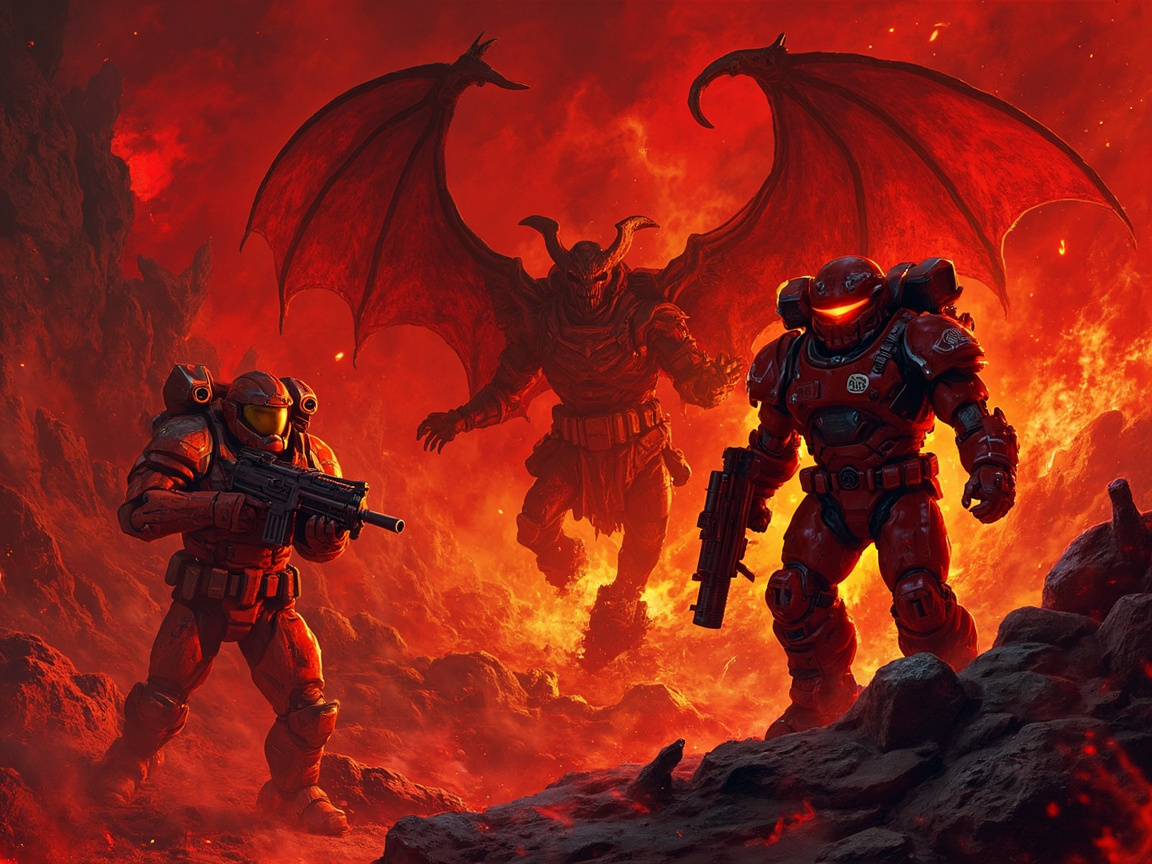
At its core, DOOM is a fast-paced shooter where you navigate labyrinthine military base facilities on Mars and in Hell, blasting through waves of demonic forces. The movement is deceptively simple — run, strafe, shoot — yet the level design and enemy placement create a twitchy, tactical rhythm that holds up remarkably well. Unlike many contemporaries, DOOM demands constant motion: standing still for even a moment often means taking heavy damage from projectile-throwing imps or shotgun-wielding sergeants.
The arsenal is a highlight. Starting with a humble pistol, you progress to a chainsaw, shotgun, chaingun, rocket launcher, plasma rifle, and the iconic BFG 9000. Each weapon has a distinct feel and strategic use, and swapping between them on the fly is where the game’s real skill ceiling lives. There is a raw, satisfying punch to every weapon that modern shooters rarely replicate.
Atmosphere and Level Design
Part of DOOM’s enduring appeal lies in its atmosphere. The game is heavy with dread — dark corridors, flickering lighting, unsettling sound effects, and demonic growls build tension before every encounter. The level design, spread across three episodes in the original release, is a masterclass in nonlinear exploration. Secret rooms, hidden passages, and optional areas reward curious players, adding a layer of replayability that was almost unheard of at the time.
Technically, DOOM was revolutionary. Its use of a pseudo-3D engine delivered smooth, real-time rendering on hardware that would be considered primitive today. The software renderer, combined with clever texture-mapped walls and sprites, created an immersive illusion of depth that captivated millions. Modding support through WAD files also spawned an entire community of creators, ensuring the game’s longevity beyond its original content.
Legacy and Significance
DOOM’s influence extends far beyond gameplay mechanics. It helped establish the PC as a premier gaming platform, drove a wave of hardware upgrades, and played a pivotal role in the rise of online multiplayer through its deathmatch mode. The game’s engine, id Tech 1, was licensed to numerous other developers, spreading its technical DNA throughout the industry.
The franchise itself has endured and evolved, with modern reboots in 2016 and 2020 proving that the core formula remains potent. But even against those polished successors, the original DOOM holds its own — its tight gameplay, iconic sound design, and historic importance make it a title that every PC gamer should experience at least once.
Final Verdict
DOOM is not merely a nostalgic artifact; it is a timeless piece of interactive entertainment that remains genuinely fun to play today. Whether you are a longtime fan revisiting a classic or a newcomer curious about where modern shooters came from, DOOM delivers an action-packed, atmospheric, and historically significant experience. It is the kind of game that defined the Action & Arcade genre and continues to set the standard for what makes a great PC shooter.
Official Website: https://www.idsoftware.com