When Crystal Dynamics rebooted the iconic Tomb Raider franchise in 2013, they delivered far more than a simple franchise refresh. They crafted a deeply emotional, character-driven origin story that reestablished Lara Croft not just as an action heroine, but as a vulnerable and brilliant survivor fighting against impossible odds.
The game opens with Lara stranded on a mysterious island off the coast of Japan after a storm destroys her expedition ship. What begins as a search for answers quickly transforms into a desperate fight for survival. From the very first moments, the developers made a bold choice: Lara is not yet the confident, gun-wielding adventurer fans knew from previous entries. She is a young archaeologist thrust into violence for the first time, and every kill, every injury, every terrifying encounter feels earned and visceral.
A Story That Packs Real Emotional Weight
One of the 2013 Tomb Raider’s greatest achievements is its storytelling. The narrative takes roughly 12–15 hours to complete, and every hour is filled with meaningful character development. Lara transforms from a frightened researcher into a hardened survivor, and the player feels every step of that journey. The voice acting is phenomenal — Camilla Luddington delivers a performance that grounds the character in real human emotion. Her Lara is smart, resourceful, and deeply relatable.
The supporting cast, including Roth, Sam, and Whitman, all serve distinct purposes in the story. The mystery of the island and the ancient Yamatai Empire creates genuine intrigue that keeps players pushing forward. This is not a story about treasure hunting — it is a story about finding yourself in the darkest of circumstances.
Gameplay: Exploration Meets Combat
Tomb Raider (2013) blends exploration, platforming, and combat into a seamless experience. The island is filled with hidden tombs, collectibles, and optional challenges that reward curious players. The platforming mechanics are tight and responsive — climbing cliffs, swinging across chasms, and sliding down mountain slopes all feel intuitive and satisfying.
The combat system received significant overhaul from previous entries. Lara carries a bow as her primary weapon, supplemented by firearms acquired throughout the adventure. The bow feels powerful and personal — taking down enemies silently with a single arrow is deeply satisfying. Firefights are intense but fair, requiring a mix of stealth and quick reflexes. The survival instincts system highlights enemy positions and environmental hazards, making encounters readable without feeling hand-holding.
Stunning Visual Design
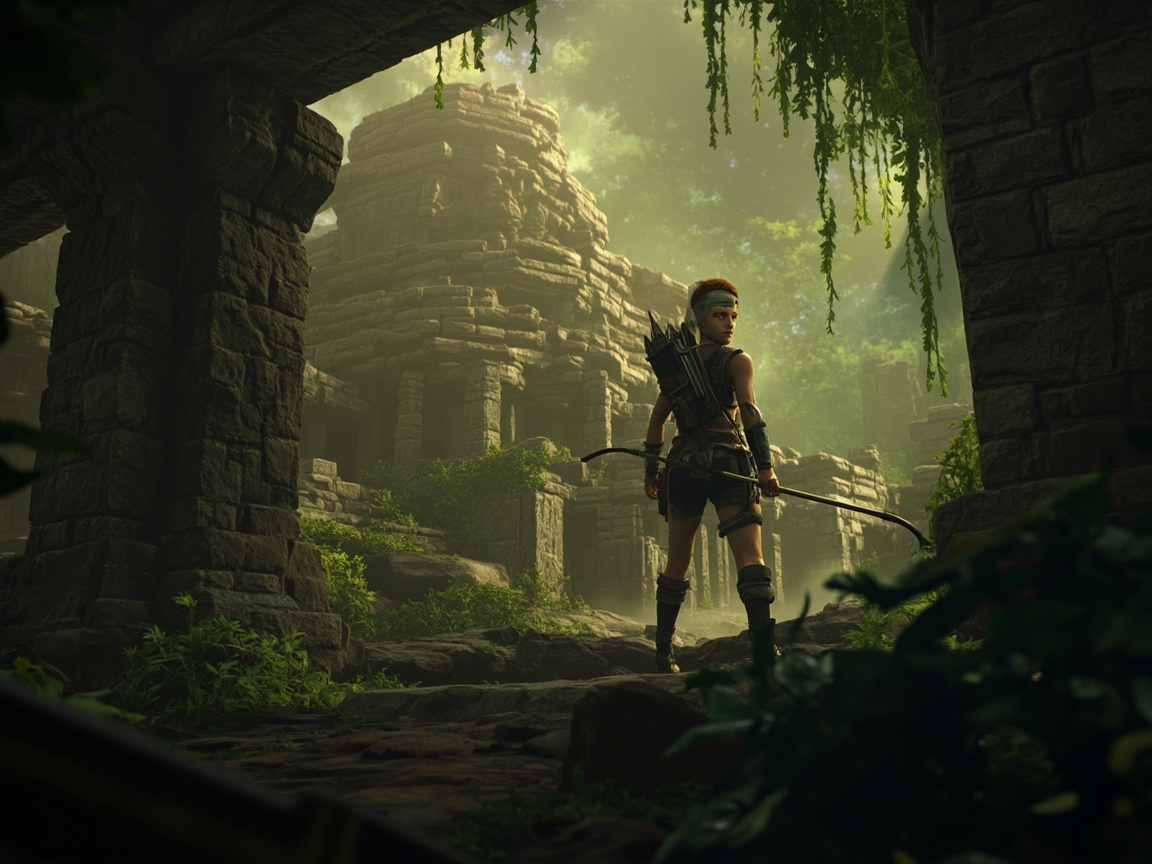
The environmental design on display here is nothing short of remarkable. The island of Yamatai shifts from dense forests and ancient ruins to snow-capped peaks and underground tombs. Each area feels distinct and meticulously crafted. The lighting engine deserves special mention — the way sunlight filters through the jungle canopy or torches illuminate dark catacombs creates atmosphere that elevates every scene.
Performance on PC is excellent, with the game supporting high-resolution textures and smooth frame rates on modern hardware. Character models, particularly Lara’s, feature impressive facial animation and attention to detail that still holds up remarkably well over a decade later.
Survivalist Atmosphere
What truly sets this Tomb Raider apart is its relentless sense of isolation. Resources are scarce, and the island constantly feels hostile. The campfire sequences, where Lara upgrades her skills and crafts new equipment, provide welcome moments of respite. These quiet scenes also feature some of the best character moments in the game, as conversations between survivors reveal backstories and build relationships.
The enemy scavengers that populate the island are genuinely menacing. They are not generic video game enemies — they feel like desperate, dangerous people. The human conflict element adds weight to encounters that might otherwise feel routine in a lesser game.
Legacy and Lasting Appeal
Tomb Raider (2013) successfully launched a trilogy that also included Rise of the Tomb Raider (2015) and Shadow of the Tomb Raider (2018). The 2013 entry set the tone: grounded, emotional, and relentlessly focused on character. It proved that major franchises could reinvent themselves without losing what made them beloved in the first place.
For players who have never experienced the reboot, this remains an excellent entry point. The PC version holds up beautifully, and the 10+ hour campaign delivers a satisfying arc from vulnerability to triumph. Whether you are a longtime fan of the franchise or a newcomer curious about one of gaming’s most iconic heroines, this is an adventure well worth taking.
Official Website: https://www.tombraider.com/