Few games manage to do what Life is Strange accomplishes: they make you care deeply about fictional people, and they give your choices weight that echoes far beyond the moment you make them. Released originally by Dontnod Entertainment and published by Square Enix, Life is Strange drops players into the shoes of Max Caulfield, a shy photography student who discovers she can rewind time. What begins as a seemingly gimmicky mechanic evolves into one of the most emotionally complex narratives in modern gaming.
A Story That Breathes
The setting is Arcadia Bay, a fictional Oregon coastal town that feels lived-in from the very first frame. Max has returned after a five-year absence, and the reason for her return — reconnecting with her estranged best friend Chloe Price — drives everything that follows. Within minutes of arriving, Max witnesses a traumatic event and instinctively uses her newfound power to prevent it. That single decision sets in motion a chain of events that will test not just her abilities, but her understanding of cause and effect, sacrifice, and what it means to do the right thing.
The writing in Life is Strange is its defining feature. The dialogue is naturalistic, occasionally awkward in the way real conversations between teenagers are, and that authenticity is precisely what makes it work. Max and Chloe’s relationship feels earned — years of history compressed into glances, unfinished sentences, and the weight of things left unsaid. Supporting characters are equally well-drawn: the mysterious Rachel Amber, the conflicted Kate Marsh, the imposing Nathan Prescott — each feels like a real person with motivations that extend beyond their role in the plot.
Rewind Mechanics and Moral Complexity
The rewind mechanic is ingeniously integrated into both the narrative and the puzzles. Early on, it feels almost like a toy — you experiment, you try different dialogue options, you see what happens. But as the story deepens, the stakes shift. Max begins to understand that every rewind has consequences, that changing one thing inevitably alters another. The game never explicitly tells you this; you discover it organically, and that discovery is far more powerful for being unguided.
By the midpoint of the five-episode arc, you realize the game has been quietly training you to think about the cost of certainty. Every choice in Life is Strange carries a weight that most games merely promise but rarely deliver. Whether you choose to tell the truth or protect a friend, save one person or another, the game tracks your decisions and shows you their ripple effects in ways both subtle and dramatic.
Atmosphere and Art Direction
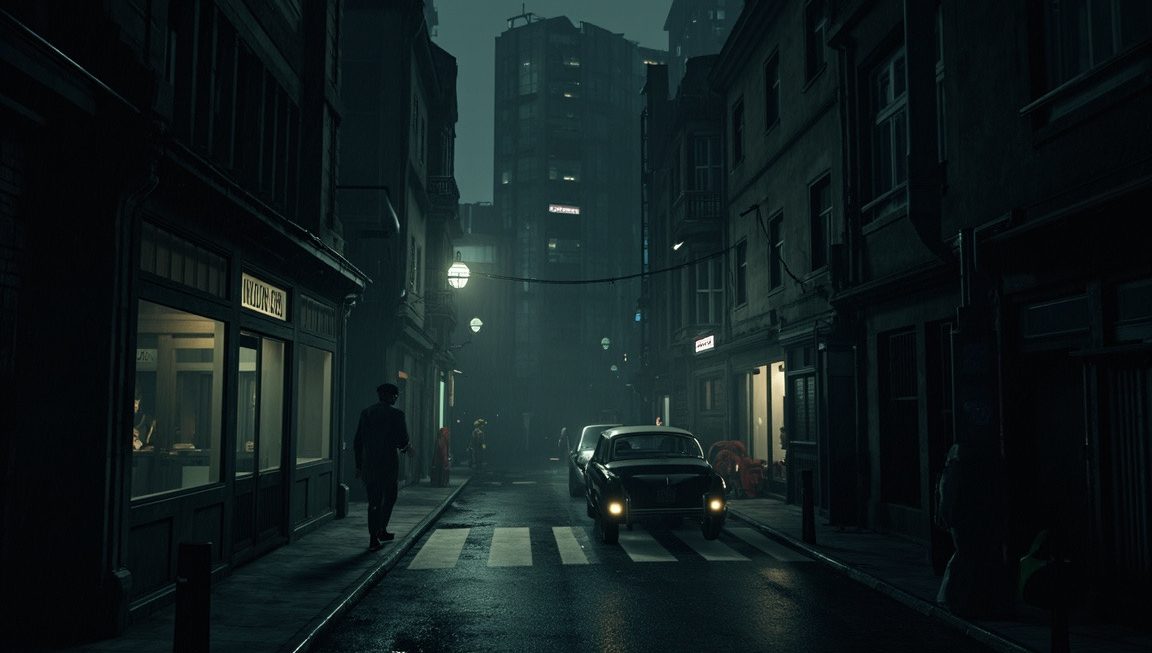
Visually, Life is Strange embraces a style over realism approach that suits its narrative ambitions perfectly. The rain-soaked streets of Arcadia Bay, the fog rolling in from the ocean, the way light filters through classroom windows — every visual choice reinforces the game’s mood of quiet melancholy and latent tension. The soundtrack, featuring bands like The National and Syd Matters, is impeccably chosen and becomes almost a character in its own right.
The episode-based structure was unconventional at the time of release, with each episode ending on a cliffhanger that made waiting for the next installment genuinely agonizing. In 2026, with the full season available, that structure translates into a relentless forward momentum — once you start, stopping becomes genuinely difficult.
What Makes It Endure
Life is Strange arrived in a period when the video game industry was still learning to take narrative seriously as a form. It proved that players would engage with a slow-burn character drama, that they would invest in relationships built through dialogue rather than combat, and that the medium could handle themes of grief, bullying, mental health, and moral ambiguity without flinching.
The game is not without flaws — some dialogue feels stilted, certain puzzle sequences break immersion, and the final episode divides opinion among fans. But these imperfections feel almost beside the point when the core experience is this affecting. Life is Strange does something rare: it changes how you think about the people around you, and it does so simply by asking you to pay attention to a story about two girls in a small town by the sea.
Verdict
Life is Strange remains a landmark in narrative gaming. Its choice-driven structure, emotionally resonant writing, and distinctive atmosphere make it essential reading for anyone who believes games can be more than entertainment. Whether you approach it as your first experience or return to it years later, the story of Max and Chloe holds up with remarkable grace.
Reviewed on PC. Also available on PlayStation, Xbox, and Nintendo Switch.